

Auckland · Thursday 26 November 2026
WUN–MICCAI* Joint Event
Responsible AI for Medical Decisions
The one-day WUN–MICCAI* joint event will be held in Auckland on Thursday 26 November 2026, bringing together the end-of-year workshop of the WUN project Responsible AI for Medical Decisions and a talk session organised by the MICCAI 2027 Local Organising Committee. The event connects researchers, clinicians, students and practitioners working on medical image computing and responsible AI for healthcare. Both communities share a joint morning session, followed by separate afternoon programmes.
Responsible AI for Medical Decisions is a research project supported by the Worldwide Universities Network (WUN). The project brings together researchers and collaborators across institutions to study human-in-the-loop explainable AI, multimodal medical imaging and report generation, and clinical decision support, with a focus on the transparency, safety, accountability and trustworthy adoption of AI in healthcare. The afternoon WUN session focuses on project updates and future collaboration.
The International Conference on Medical Image Computing and Computer Assisted Intervention (MICCAI) is the premier international conference in medical image computing and computer-assisted intervention. MICCAI 2027, the 30th MICCAI, will be held in Auckland, New Zealand, from 27 September to 1 October 2027. Ahead of the conference, the MICCAI 2027 Local Organising Committee brings together the medical imaging and medical AI community in Aotearoa New Zealand for a talk session on research relevant to MICCAI and a discussion of initiatives related to MICCAI 2027.
We warmly invite you to join us! Attendance is free, but registration is required; please see Registration below.
- Date: Thursday 26 November 2026
- Time: 9:00 am – 5:00 pm (Auckland, New Zealand time)
- Morning joint session: PLT1 Lecture Theatre (303-G20), 38 Princes Street, University of Auckland
- MICCAI discussion session (12:30–2:00 pm): Level 9, 70 Symonds Street, Auckland
- WUN afternoon session: Room 303-G16, 38 Princes Street, University of Auckland
- Catering: Morning tea and afternoon tea provided
- Format: In person; the morning joint session and the MICCAI discussion session can also be joined via Zoom
- Zoom (morning joint session and MICCAI discussion session): Meeting ID 686 473 8187
- Registration: Free, but required. How to register
Programme
The morning session is shared by both events. From 12:30 pm, the WUN workshop and the MICCAI session run separately. All times are in Auckland, New Zealand time.
Abstract
AI has brought clinicians and engineers closer than ever. Nonetheless, the two groups often hold very different mindsets and scientific priorities. For example, pushing the SOTA performance for tumour segmentation is a major achievement for engineers, but for clinicians it seldom registers at the same level of recognition. Conversely, statistical significance is a key signal of clinical relevance to clinicians, whereas engineers seldom conduct or present such analyses. With the rapid advancement of AI, it is now more possible than ever to bring impact to clinical service, but only if both sides understand what the other values.
Drawing on a radiology perspective, this talk aims to offer engineer talents a window into how clinicians think about AI: what questions they ask when presented with a new model, what makes them trust or distrust it, and why a strong benchmark result does not automatically translate into clinical usefulness. We will walk through common points of miscommunication, such as benchmark metrics versus clinical outcomes, test-set performance versus real-world generalisability, and average accuracy versus failure modes and workflow fit. We will also discuss practical ways to bridge these gaps, from agreeing on study endpoints early to reporting results in a form clinicians can interpret. Attendees will leave with a shared vocabulary and a set of questions to raise with clinical collaborators at the start of a project, helping AI move from bench to bedside.
Abstract
Starship Children’s Hospital sees around 30,000 acute presentations each year. Planning for periods of increased demand, including winter respiratory surges, emergencies and natural disasters, often relies on historical averages and relatively simple models of patient flow. These approaches are limited in hospitals because they are complex adaptive systems: outcomes emerge from interactions between patients, staff, resources, clinical decisions and the physical environment. Agent-based simulation can represent these interactions directly, but until recently the computational and technical requirements of modelling an entire hospital at high fidelity have been prohibitive. Advances in AI agent architectures, physiological modelling and accessible high-performance computing now make a new approach possible. We have developed a prototype 3D agent-based hospital simulator. Healthcare staff are represented by AI agents that make independent decisions using a clinical knowledge graph. Each patient has an underlying physiological state that deteriorates with disease and responds to treatment, while the information available to clinicians depends on when observations are made and recorded. Staff, patients, whānau and the physical hospital environment are simulated together, allowing repeated experiments on how changes in staffing, workload, capacity and clinical processes affect care.
Abstract
Hyperspectral imaging simultaneously captures rich spectral and spatial information from biological tissues, providing a powerful tool for tissue characterization, pathological change detection, and computer-aided diagnosis. This talk will first introduce hyperspectral imaging technologies and spectral-spatial analysis methods for characterizing the material and compositional properties of biological tissues. It will then review recent advances in hyperspectral imaging for medical and healthcare applications, with particular emphasis on exploiting tissue-specific spectral responses for detecting and identifying disease-related characteristics. Several case studies will be presented, including early screening of skin cancer, detection of cholesteatoma, and hyperspectral microscopic cell classification. These studies demonstrate the potential of hyperspectral imaging for non-invasive or minimally invasive detection, tissue identification, and cellular phenotyping. Finally, the talk will discuss current challenges and future directions in advancing hyperspectral imaging from high-dimensional spectral data analysis toward intelligent medical sensing and clinical applications.
Abstract
Artificial intelligence has achieved remarkable advances in perception and recognition, yet many AI systems continue to struggle in dynamic, open-world environments where data distributions evolve, labelled examples are limited, and new concepts emerge over time. Wildlife conservation presents precisely these challenges. Building AI that can operate reliably in natural ecosystems therefore requires advances beyond conventional supervised learning, spanning continual learning, open-world recognition, multimodal foundation models, uncertainty estimation, and trustworthy AI.
New Zealand provides a unique testbed for this research. Its distinctive biodiversity, together with ambitious conservation programmes targeting introduced predators and endangered native species, creates opportunities to develop AI methods that must adapt to changing environments while supporting real-world conservation decisions.
In this talk, I will present recent AI research from the Centre for Machine Learning for Social Good at the University of Auckland, where we are developing intelligent systems for long-term wildlife monitoring in dynamic, open-world environments. Our work spans computer vision, multimodal foundation models, continual learning, open-world recognition, and trustworthy AI to enable the identification of individual animals, adaptation to changing ecosystems, and learning from limited and evolving data. These challenges are motivating new advances in representation learning, robust multimodal reasoning, and AI systems capable of reliable long-term deployment beyond benchmark datasets.
The talk will conclude by examining how wildlife conservation is driving advances in artificial intelligence. The need for AI systems that can recognise new individuals, adapt to changing environments, learn continuously, and make reliable decisions under uncertainty is motivating research that extends beyond conservation and contributes to the development of more general, robust, and trustworthy intelligent systems.
Abstract
Recent advancements in sensing and deep learning have unlocked exciting possibilities for the visual analysis of human and animal motions in the physical 3D space. These innovations hold great potential for applications across diverse domains, including for example natural user interfaces, AR/VR, robotics, and gaming. In this talk, I will present the latest research progress in this rapidly evolving field including especially 3D human motion generation, pose tracking and shape reconstruction, and related tasks – highlighting key developments from the past few years as well as contributions from our own work.
Abstract
Continual learning enables AI systems to keep learning during development and after deployment, laying the foundation for self-improving AI. I will highlight that continual learning is not a single paradigm but a spectrum of mechanisms, from weight updates and modular expansion to external memory, test-time learning, and agentic learning. Continual learning has a thousand faces, yet all address the same questions: what to change, what to preserve, and where knowledge lives. This talk takes a modular view of these questions, moving from models to agents. It will cover our work on dynamic Mixture-of-Experts for continual learning in foundation models. We incrementally add experts to LLMs and multimodal LLMs as parametric memory, while mitigating forgetting caused by routing drift as experts accumulate. I will then turn to agentic continual learning, where agents learn from their own experience as they act, often without labels. I will show how agents can evolve at test time through changes to their harness and memory, or updates to LLM parameters. Together, these approaches point toward AI that keeps evolving with us long after pre-training ends.
Speakers
MICCAI session
-
 Keynote speaker · Adjunct Professor
Tanveer Fathima Syeda-Mahmood
Department of Biomedical Data Science, Stanford University
-
 Associate Professor
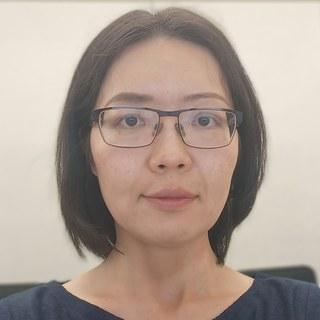
Yang Song
School of Computer Science and Engineering, UNSW
-
 Senior Research Fellow
Hayley Reynolds
Auckland Bioengineering Institute, University of Auckland
-
 Senior Research Fellow
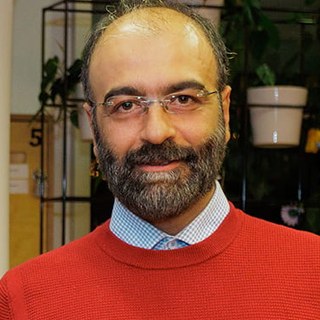
Hamid Abbasi
Advanced NeuroTech Lab, University of Auckland
-
 Research Fellow
Fatemeh Esmaeili
University of Auckland
WUN workshop
-
 Research Assistant Professor
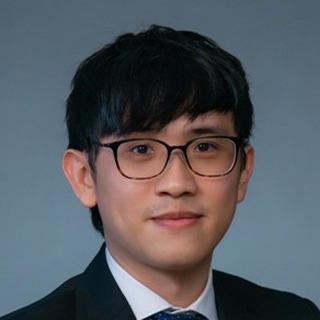
Matthew Lun Wong
Department of Imaging and Interventional Radiology, CUHK
-
 Associate Professor
Chris Paton
Liggins Institute, University of Auckland
-
 Distinguished Professor
Jun Zhou
School of Information and Electronic Engineering, East China Normal University
-
 Lecturer
Xinyu Zhang
School of Computer Science, University of Auckland
-
 Professor
Yun Sing Koh
School of Computer Science, University of Auckland
-
 Associate Professor
Jichao Zhao
Auckland Bioengineering Institute, University of Auckland
-
 Professor
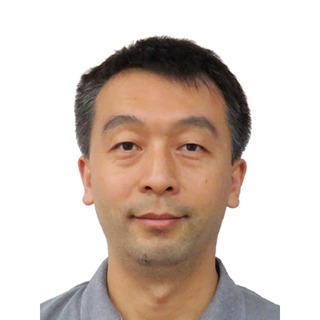
Li Cheng
Department of Electrical and Computer Engineering, University of Alberta
-
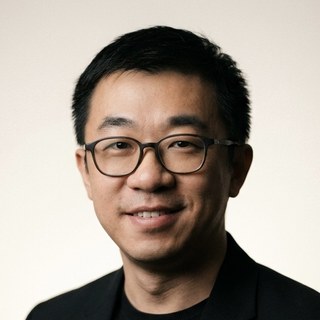 Senior Lecturer
Dong Gong
School of Computer Science and Engineering, UNSW
Registration
Attendance is free, but registration is required so that we can plan catering and room capacity. Please complete the registration form by Tuesday 24 November 2026 and let us know about any dietary requirements.
Participants registered for the MICCAI session are welcome at the joint morning session. If you also plan to attend the WUN afternoon session, please register using the form above.
Organisers
-
Xinyu Zhang
University of Auckland
-
Jichao Zhao
University of Auckland
-
Centre of Machine Learning for Social Good
University of Auckland
For enquiries, please contact Xinyu Zhang (xinyu.zhang@auckland.ac.nz) or Jichao Zhao (j.zhao@auckland.ac.nz).